
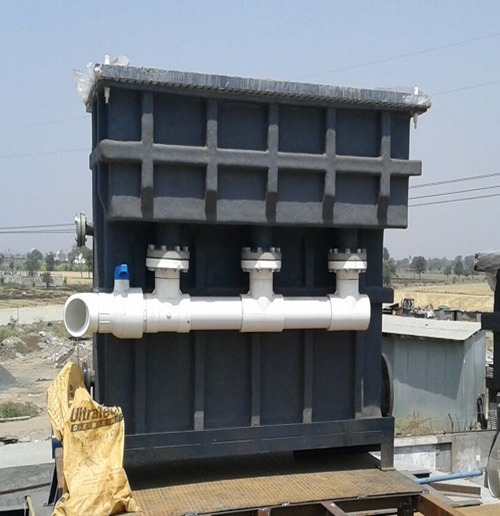
Electro-coagulation

Electro-coagulation

  • Electro-coagulation is the process of destabilizing suspended, emulsified, or dissolved contaminants in an aqueous medium by introducing an electrical current into the medium.
  • The electrical current provides the electromotive force to drive the chemical reactions.
  • When reactions are driven or forced, the elements or compound will approach the most stable state.
  • Generally, this stable state is a solid that is either, less colloidal, less emulsified, or less soluble than the element or compound at equilibrium values.
  • As this occurs the contaminants form hydrophobic entities such as precipitates or phase separations, which can easily be removed by a number of secondary separation techniques.
  • It has wide application in metal plating industries which has heavy metals in the effluent, then in the effluents contained emulsified oil, textile effluent, etc.


Electro-coagulation Capabilities:


  • Removes heavy metals like Cr, Cd, Cu, Ni, Zn, Al etc.
  • Removes suspended and colloidal solids
  • Breaks oil emulsions in water
  • Removes fats, oil, and grease
  • Removes complex organics
  • Destroys & removes bacteria, viruses & cysts

Electro-coagulation Benefits:

  • Reduce Sludge Volume
  • No Chemicals like lime which increases the sludge quantity
  • Process Multiple Contaminants
  • Low foot print area
  • Harvest Proteins, Oils, and Metals
  • More than 70% removal of COD
  • Easy to maintain


Treatment Requirement

Treatment Process